
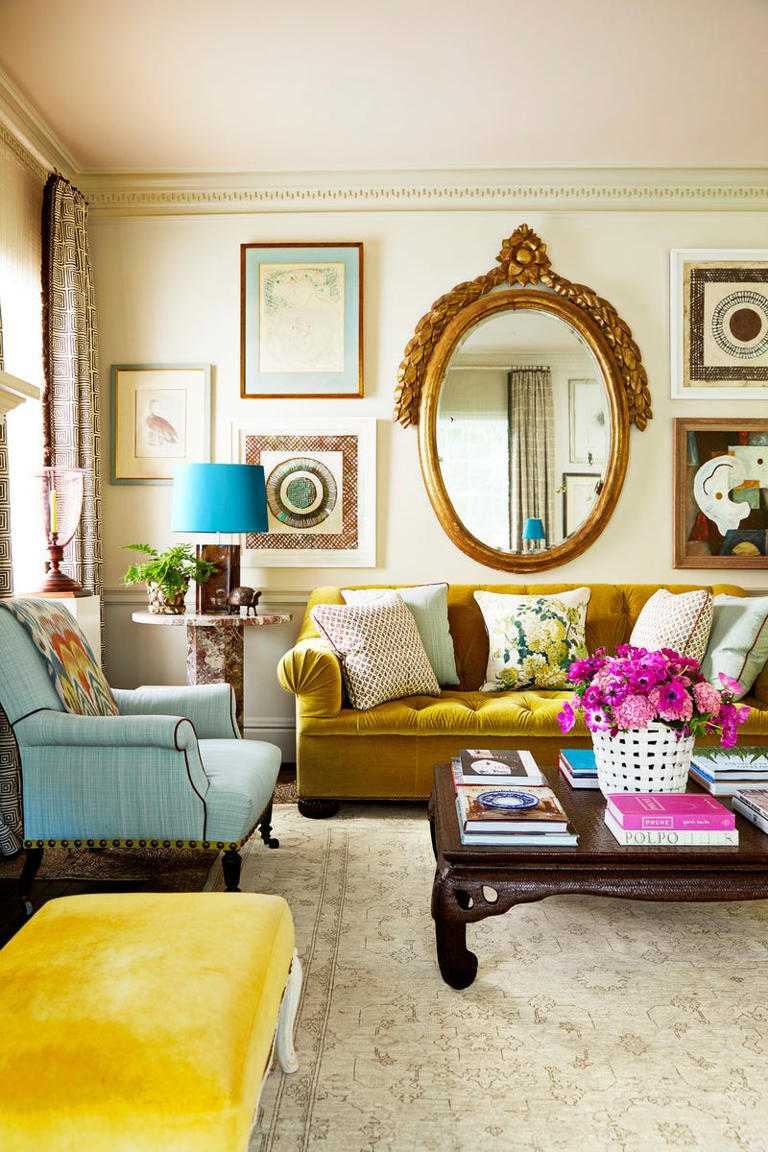
Pictured Above: The living room of a gorgeous country house in Millbrook, New York, designed by Alison Newman.
Why have so many of the most popular home and lifestyle trends in recent years centered on our grandmothers? From the renewed interest in vintage and antique-inspired design to celebrities openly embracing slower, more traditional pastimes like knitting, gardening, and needlepoint, there’s an unmistakable shift toward a more “grandmotherly” way of living—particularly among younger people. Even cottagecore, despite not explicitly referencing older generations, reflects an interior design style that aligns perfectly with this wave of nostalgia.
As the outlet that originally introduced the term “grandmillennial,” House Beautiful has long been familiar with this aesthetic movement rooted in admiration for family matriarchs. While today’s broader fascination with nostalgia certainly plays a role, it doesn’t fully explain why this trend has taken hold so strongly right now.
“Every generation (at some point!) looks back with nostalgia,” says Dr. Easton Gaines, a clinical psychologist based out of New York City and founder of MindCare Psychology. “But the intensity of this moment feels unique.”
To better understand what’s driving this widespread embrace of grandma-inspired style and hobbies, we asked Gaines and several other psychologists to weigh in. Although there isn’t a single, widely recognized term for this phenomenon—unlike concepts such as the Diderot effect, which describes the impulse to continuously redecorate—there are meaningful psychological forces behind its growing appeal. Together, these insights help explain why elements once associated with older generations are now being reimagined and celebrated in contemporary culture.
Why Are We Obsessed With “Grandma” Aesthetics?
Nostalgia plays a big part in our love of grandma aesthetics and hobbies.
“Nostalgia is a healthy, social emotion,” explains Dr. Melissa Gluck, founder and clinical director of Gluck Psychology Collective. “It reminds us of loved ones from older generations and makes us feel connected to others.” This feeling also connects us to an earlier part of ourselves, and it can help us cope with the fact that we can’t relive the past.
However, it’s not just you feeling the pull toward the past. Marketers and brands frequently capitalize on this wistful feeling through a tactic called “nostalgia marketing.” An Amazon Ads page describes it as “a marketing strategy that takes the power of nostalgia, emotional connection, and the comfort that comes from a throwback to reach consumers.” So, if you’ve recently felt influenced to buy a product because its branding felt cozy and homespun, this is why.
The reason why nostalgia is so powerful is that it reminds us of a simpler time and makes us feel safe.
“In psychology, this trend can be understood through the lens of ‘nostalgia as an emotional regulation strategy,’” says Dr. Alfonso Ferguson, a licensed mental health counselor. “In times of uncertainty or rapid change, people gravitate toward familiar, comforting symbols, whether it’s the warmth of a crocheted blanket, the smell of baked bread, or the slow ritual of a Sunday meal.” By getting interested in activities that feel archetypally “grandma,” we’re creating a sense of safety, stability, and a connection to tradition, Ferguson adds.
What’s Causing the Rise of “Grandma” Aesthetics Now?
In the United States, we’re currently navigating through a lot of cultural shifts. The tense political climate, looming economic uncertainty, and ever-changing landscape of the digital world are a recipe for burnout.
“We are living in a season of collective exhaustion,” Gaines says. “Our calendars are full, our phones never stop, and our worth is too often tied to productivity.”
Our way of living is extremely fast-paced, and everything we could ever want to know is at our fingertips thanks to our access to smartphones. Especially for the younger generations who have been steeped in this culture for most of their lives, it’s difficult to find a moment where life feels slow unless it’s sought out.
“The interest signals a hunger for simplicity, for rituals that anchor us, and for an ease in presence that so many of us have forgotten,” Gaines explains. “In a culture obsessed with optimization, ‘grandma culture’ reminds us that life is not a project to be managed, but a series of moments to be lived.”
How to Live the “Grandma” Lifestyle
Thankfully, you don’t have to wait until you’re an octogenarian to start adopting more calming, grandmotherly habits. Here are a few ways to get started.
Pick Up a Slow-Paced Hobby
Studies have shown that people who enjoy grandma hobbies have better mental health, so consider trying out a few to reap the benefits. Knitting can help with your concentration and attention; bird watching offers significant mental health benefits; clay art can help with depression and anxiety; and gardening brings happiness and can improve hand strength and self-esteem. And remember: You don’t have to be necessarily “good” at a hobby—you’re just trying to have fun.
Seek Inspiration From “Grandmacore” Design Styles
Reveling in grandma-chic interiors (no matter where you live) is another comforting pastime. Here are the top design styles you should familiarize yourself with:
- Cottagecore is the calming and cozy choice if you like a bit of a country vibe with an elegant look.
- English country style is similar to cottagecore but with a more muted color scheme, visibly well-loved furnishings, and plenty of natural finishes like wood and stone.
- Coastal grandmother is an airy, minimalist, and beachy aesthetic. If you loved Diane Keaton’s house in Nancy Meyers’s Something’s Gotta Give, then this is for you.
- Grandmillennial style is a new classic with its patterned wallpapers, intentionally cluttered rooms, and overall traditional style with modern touches.
Curate Specific Decor
Once you’ve honed in on an aesthetic that suits you, start curating grandma-inspired decor by incorporating plenty of antiques and charming little trinkets. While you can buy new, most modern pieces lack the character and patina that give this style its lived-in warmth. Instead, browse apps and websites dedicated to vintage or secondhand finds, shop larger items at local thrift stores or secondhand furniture shops, and don’t overlook yard sales and estate sales. There are plenty of ways to uncover these treasures—they just take a bit more time (and patience) than your average online scroll.