
The Generational Divide: Why “Old School” Habits Are Clashing with Modern Trends
Every generation has its quirks, but some habits that Boomers—born between 1946 and 1964—still hold onto leave younger generations scratching their heads. Whether it’s their unwavering loyalty to outdated technology or a deep-seated resistance to modern digital trends, Boomers often maintain a unique way of navigating daily life. For a generation raised on rapid technological shifts and wellness biohacking, these thirty legacy behaviors are more than just nostalgic; they are completely baffling to the digital-native cohorts of Millennials and Gen Z.
A major point of confusion lies in the insistence on using physical media for tasks that have been streamlined by cloud technology. While younger generations favor the speed and accessibility of digital syncs, many Boomers still prefer printing out map directions or keeping thick file folders of paper receipts. This resistance to paperless workflows is seen not just as an environmental concern, but as a significant barrier to the “search and find” efficiency that defines modern life.
In the realm of wellness and health, the “tough it out” mentality often replaces preventative sports science. Younger fitness enthusiasts, who prioritize recovery and mobility, find it confusing when Boomers ignore chronic joint pain or dismiss mental health days as unnecessary. Modern longevity experts emphasize that addressing small physiological signals early is the key to staying active, yet the Boomer habit of “gritting your teeth” remains a persistent point of friction.
Communication style is another area where the signal often gets lost in translation. Many Boomers continue to leave long, detailed voicemails or send emails that read like formal 1990s memos, complete with mysterious ellipses. For Millennials and Gen Z, who value lean, asynchronous messaging and instant chat, these formal methods feel like an unnecessary drain on time and productivity that complicates simple social coordination.
Technological loyalty also extends to the home, where maintaining a landline telephone is a habit that younger generations cannot justify. With the ubiquity of smartphones, the idea of a tethered device that only serves one function feels like a relic of a bygone era. Younger people see the landline as an open invitation for telemarketers, while Boomers often view it as a vital security blanket for “real” emergencies.
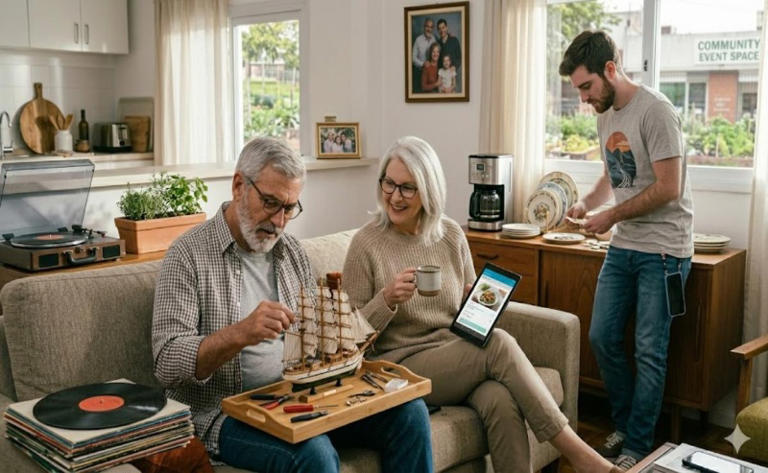
Socially, the habit of answering the phone for unknown numbers is a major generational divide. Boomers were raised in an era where an unanswered call was a missed opportunity, whereas younger generations treat an unknown caller ID with extreme suspicion. This willingness to engage with strangers on the phone is one of the most baffling behaviors to Gen Z, who would much rather screen a call and wait for a text.
Financial habits also remain rooted in the past, specifically the continued use of paper checks at grocery store checkout lines. In an age of tap-to-pay and digital wallets, the process of manually writing out a check feels painfully slow to those waiting in line behind them. Younger generations prioritize frictionless transactions, making the physical checkbook a symbol of a generation that isn’t quite ready to let go of tangible paper currency.
Furthermore, the Boomer tendency to rely on cable television bundles rather than curated streaming services is a source of constant debate. Younger cohorts prefer the autonomy of picking exactly what they want to watch without commercial interruptions. To them, paying for hundreds of channels they never watch is a financial habit that makes little sense in the era of on-demand content and niche digital communities.
Ultimately, bridging this gap requires understanding that these habits were once the pinnacle of modern living. While it’s easy to laugh at a cluttered desktop of icons or an “accidental” Facebook post, these behaviors represent a generation that built the foundation of the world we live in today. By acknowledging these confusing legacy habits, both sides can find a middle ground where old-school wisdom meets the high-speed efficiency of the future.