

Most conversations about personal climate action circle back to the same short list: recycle more, take shorter showers, switch to LED bulbs. These things aren’t useless, but they don’t come close to capturing where individual choices actually move the needle. The gap between what feels virtuous and what genuinely reduces emissions is wider than most people expect.
Research from the World Resources Institute found that shifting to eleven pro-climate behaviors in the energy, transport, and food sectors could reduce an individual’s greenhouse gas emissions by roughly six and a half tonnes per year. That’s substantial. The tricky part is knowing which habits to prioritize. Some of the most impactful ones rarely appear on mainstream “green tips” lists, and a few might genuinely surprise you.
Rethinking What You Eat – and How Much of It You Throw Away

A comprehensive study identified eating a plant-based diet as one of the four actions with the greatest impact on an individual’s greenhouse gas emissions. The numbers behind this aren’t minor. Beef produces around 60 kilograms of CO2 equivalent per kilogram of meat, while vegetables and legumes generally produce less than 3 kilograms per kilogram. That’s a staggering difference for something as routine as what lands on your plate.
Equally underappreciated is what happens to the food you don’t actually eat. If global food waste were a country, it would be the third-largest contributor to greenhouse gas emissions in the world, with wasted food contributing about 3.3 gigatons of carbon dioxide equivalent emissions to the atmosphere every year, according to the United Nations Food and Agriculture Organization. ReFED’s analysis shows that 23 million tons of surplus food were sent to landfill in 2024, releasing over 600,000 metric tons of methane. Cutting food waste is, in effect, a double climate win: it reduces the emissions baked into food production and avoids the methane released when it rots underground.
Going Car-Free – or Simply Driving Far Less
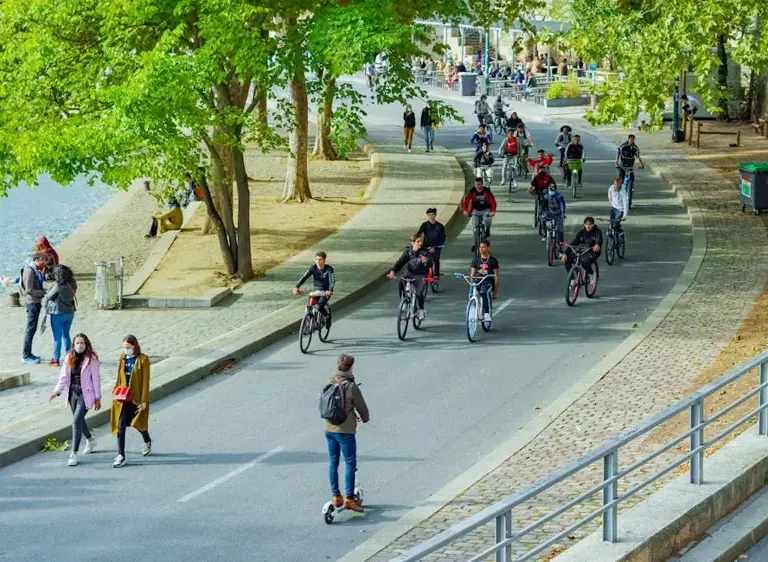
Data shows the most impactful actions individuals can take to help cut carbon emissions are living car-free, flying less, and using renewable energy at home. Living without a car is not realistic for everyone, particularly in places with limited public transit. Still, living car-free for a year saves around 2.4 tonnes of CO2 equivalent, which is a meaningful slice of most people’s total annual footprint. Even partial steps, like substituting a few car trips per week with cycling or public transit, compound over time.
Walking and running are among the least environmentally harmful modes of transportation, with cycling following closely behind. Public transport such as electric buses, metro systems, and electric trains generally emit fewer greenhouse gases than cars per passenger. The habit shift here doesn’t have to be all-or-nothing. Project Drawdown and RARE, among others, have shown that about one-third of the solutions needed to stop climate change are best implemented at the household or family level. Reducing car dependence is one of the clearest expressions of that principle in daily life.
Flying Less – Especially Skipping Long-Haul Trips

Flying is one of the most carbon-intensive activities people engage in. A single long-haul flight can generate as much carbon as driving a car for an entire year. Despite this, aviation tends to get softer treatment in public discussions about personal emissions than diet or driving. WRI research shows that the world’s top emitters have historically overlooked behaviors with high emissions-reduction potential, such as food choices and air travel, in their national climate commitments.
Each roundtrip transatlantic flight avoided saves around 1.6 tonnes of CO2 equivalent. For context, per capita carbon dioxide emissions should not exceed 2.1 tonnes annually by 2050 if the goal of limiting global temperature increase to well below two degrees Celsius is to be achieved. That means a single avoided transatlantic flight represents a significant fraction of what the entire annual budget needs to look like in the future. Choosing trains over short-haul flights or combining trips thoughtfully are habits that add up faster than most people realize.
Where You Keep Your Money and How It Gets Invested

This one tends to catch people off guard. Most of us don’t think of a savings account as a climate decision, but the link between personal banking and fossil fuel financing is more direct than it looks. Banks increased fossil fuel financing by roughly 162 billion dollars from 2023 to 2024, and banks have financed fossil fuels by nearly 7.9 trillion dollars since the Paris Agreement. U.S. banks alone committed around 289 billion dollars in fossil fuel financing in 2024, with JPMorgan Chase, Bank of America, Citigroup, and Wells Fargo together representing roughly a fifth of total global fossil fuel financing in the scope of that report.
Switching to a bank or credit union that does not finance fossil fuel expansion is a one-time action with a continuous downstream effect. Banks themselves don’t produce a lot of direct greenhouse gas emissions, but they wield the power of financing. By prioritizing lending toward climate solutions and phasing out harmful financing, banks can play a critical role in reducing emissions across just about every sector of the economy. Moving your money to an institution with a verified climate policy doesn’t require lifestyle sacrifice, but it redirects what your deposits support every single day.
Voting and Engaging With Policy – Even at the Local Level

Political actions, like voting and joining climate campaigns, are among the most impactful things an individual can take. This gets dismissed as too abstract, but the evidence points the other way. Pro-climate behavior changes could theoretically cancel out all the greenhouse gas emissions an average person produces each year, but efforts focused exclusively on changing behaviors and not the overarching systems around them only achieve about one-tenth of this emissions-reduction potential. The remaining ninety percent stays locked away, dependent on governments, businesses, and collective action to make sustainable choices more accessible for everyone.
Voting at both the national and local levels is key, as elections directly determine whether governments enable or hinder pro-climate behaviors. Local decisions – zoning rules that permit denser housing, investments in bike infrastructure, public transit funding, building codes that require efficiency – shape whether the high-impact habits described above are even possible for most people. Every individual action results in unseen ripples that influence the larger systems of which we are all a part. Switching to an electric vehicle or installing solar panels not only reduces your own carbon emissions but influences those around you and sends a signal to politicians and the market. The same logic applies to the ballot box. Personal choices and political engagement aren’t separate categories – they reinforce each other.
None of these habits require perfection. The research consistently shows that doing more of what matters most, even imperfectly, beats doing many small things that feel active but leave the larger picture unchanged. The five areas above – diet and food waste, car use, air travel, banking, and political engagement – represent places where daily decisions intersect with the systems that will actually determine how this goes.